
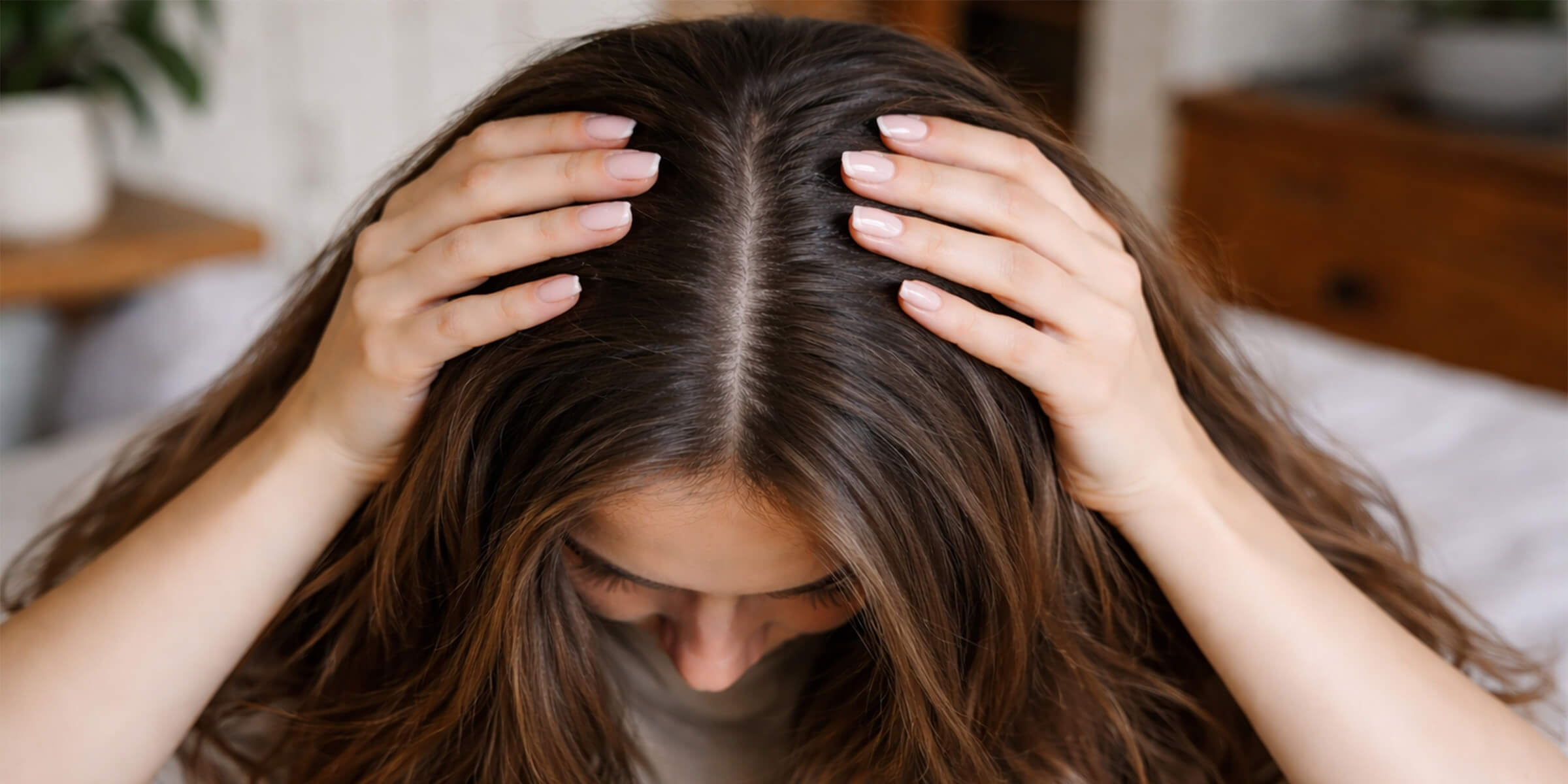
Most people try to fix their hair from the ends. They focus on masks, oils, split-end products, and styling damage. And sometimes that helps. But in a surprising number of cases, the real problem starts earlier, at the scalp. A healthy scalp helps support stronger-looking hair, better texture, and a more balanced environment for the hair you already have. When the scalp feels off, the hair often shows it first. If your hair has been feeling weaker, duller, harder to manage, or just “not right,” these are some of the most common signs that your scalp may be part of the reason.
1. Your scalp feels dry, tight, or itchy all the time
A dry or uncomfortable scalp is one of the clearest warning signs that something is off. When the scalp feels constantly tight, flaky, irritated, or itchy, it usually means the skin barrier is struggling to stay balanced. That can affect how comfortable your scalp feels day to day, but it can also impact how your hair looks and behaves over time. Many people treat the hair and ignore the scalp completely, even when the discomfort is ongoing. But if the scalp never feels calm, the rest of your routine often stops working as well as it should.
2. Your hair looks dull even when you use good products
If your hair still looks flat, rough, or tired after conditioner, masks, and styling products, the issue may not be the strands alone. Hair that grows from an unhealthy-feeling scalp environment can often look less vibrant, less smooth, and harder to refresh. It may not hold softness well, and it may lose shine faster than expected. This is one of the biggest reasons people keep changing products without seeing real improvement. They treat the symptoms of the hair, but the source of the imbalance stays the same.
3. You have frizz that doesn’t seem to make sense
Not all frizz comes from humidity or heat damage. Sometimes frizz becomes more noticeable because the hair itself feels weaker, drier, or more reactive from the root area down. If your scalp is unbalanced, the hair that grows from it may become harder to manage, especially around the crown, part line, and top layers. If your frizz keeps coming back no matter how much smoothing product you use, it’s worth stepping back and asking whether the issue starts higher up than you think.
4. Your hair feels weak even after conditioning
Conditioner can make hair feel softer. It cannot solve every type of weakness.
If your hair still feels fragile, overly dry, or easy to break even after a good wash routine, that may be a sign that your scalp and overall hair environment need more attention. This is especially true if the weakness seems ongoing rather than occasional. When the scalp is neglected for too long, the hair often ends up needing more than surface-level softness.
5. You notice more shedding than usual
Some shedding is normal. Everyone loses hair during washing, brushing, and daily life. But if you start noticing more hair in the shower, on your brush, or on your clothes than feels normal for you, it can be worth paying attention to what’s happening at the scalp level. Excess shedding does not always mean something serious, but it can be one of the earliest signs that your scalp feels stressed, dry, or unbalanced.
The key is not to panic, it’s to notice patterns.
6. Your hair stops looking healthy long before the ends do
A lot of people assume hair problems show up at the ends first. But sometimes the earliest visible signs show up much closer to the scalp. You may notice:
- hair that feels rough near the roots
- reduced smoothness at the crown
- less movement
- less softness overall
When that happens, it usually means the issue is not just “old damage.” It may be a sign that the scalp environment and the hair routine are out of sync.
7. Your hair never seems to improve for long
This is the big one. If every new routine seems to work for a week, then everything goes back to dryness, frizz, dullness, or weakness, the problem may be deeper than product choice alone. Temporary improvement followed by the same repeating issues often means your routine is missing the scalp completely. That doesn’t mean you need to throw everything out. It means you may need to start thinking about scalp care and hair care together, not separately. Why scalp health matters more than people think
Healthy-looking hair does not begin with styling. It begins with the condition of the scalp and the consistency of the routine around it. That doesn’t mean every hair issue starts at the scalp. But it does mean the scalp is often the missing piece in routines that never seem to fully work. When you support the scalp properly and follow with the right repair and styling products, hair usually becomes easier to manage, softer-looking, and more resilient over time.
What to do if these signs sound familiar
If several of these signs feel familiar, the best next step is usually not “more products.” It’s a smarter routine. Start by simplifying:
- support the scalp first
- avoid over-drying the roots
- reduce unnecessary stress from heat and buildup
- use targeted hair repair where needed
You do not need a dramatic reset. You need a routine that works together.
Frequently Asked Questions
How do I know if my scalp is unhealthy?
Common signs include dryness, tightness, itchiness, flaking, excess shedding, and hair that feels harder to manage over time.
Can scalp problems affect how my hair looks?
Yes. In many cases, scalp imbalance can show up as dullness, frizz, rough texture, and weaker-looking hair.
Is frizz ever related to the scalp?
Yes. While frizz can come from humidity or damage, it can also become more noticeable when the scalp and hair environment feel unbalanced.
Does a dry scalp affect damaged hair?
It can. A dry scalp often makes it harder for the overall hair routine to feel effective, especially when hair already feels stressed or fragile.
What should I use if my scalp and hair both feel unhealthy?
The best approach is usually a routine that supports scalp health first, then addresses the lengths and ends with targeted repair and moisture.
Final Thoughts
Hair problems do not always start where they show up. Sometimes the ends look dry. Sometimes the lengths feel weak. Sometimes the frizz seems random. But the root cause may be sitting much closer to the scalp than most people realize. Once you start looking at your scalp and hair as part of the same system, the routine usually makes a lot more sense, and the results tend to feel much more consistent.
Share:
The Science of Scalp Health and Hair Strength
How to Get Volume That Actually Lasts and Doesn’t Fall Flat in 20 Minutes