
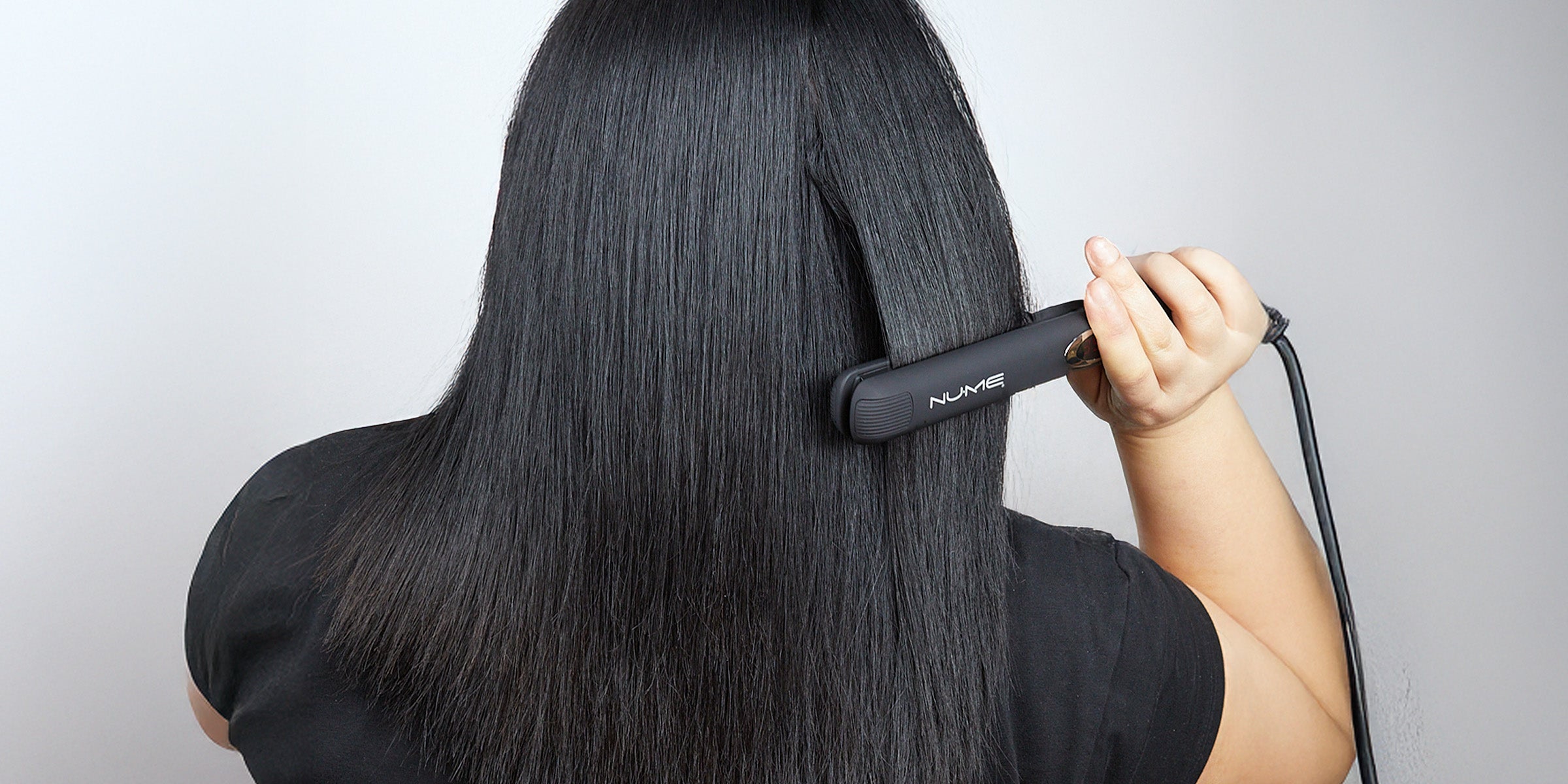
Thick hair is beautiful, but it doesn't always cooperate. If you've ever used a flat iron on thick hair only to step outside and watch it puff up as if nothing happened, the problem usually isn't your hair. It's the tool, the technique, or both. Here's how to fix that.
What to Look for in a Flat Iron for Thick Hair
Plate Width: Wider plates (1.5 to 2 inches) cover more surface area per pass, which means fewer passes and less heat exposure overall. If straight, sleek hair is your main goal, it's worth looking at flat irons with extra-wide plates, around 1.75 inches, which are especially effective on dense, high-volume hair. Keep in mind: the wider the plates, the less suited the iron is for curling. If you like to switch between straight and wavy styles with the same tool, a standard 1–1.5-inch iron gives you more versatility.

Plate Material: Not all plates are equal, and when it comes to picking a flat iron for thick hair, this choice matters more than most people think. Titanium heats fast, holds temperature consistently, and glides through thick hair effortlessly. Ceramic is gentler and distributes heat more evenly. For thick and coarse hair, titanium tends to win. For thick hair that's also color-treated or dry, a ceramic or ceramic-titanium hybrid is the smarter choice. When comparing, looking at options across different plate materials and heat ranges side by side makes the decision much easier.
Temperature Range: Here's a mistake almost everyone with thick hair makes: not using enough heat. If your flat iron isn't hot enough, you end up going over the same section three, four, five times, and that's where real damage happens. Look for a flat iron that reaches at least 450°F with precise adjustable settings. A good starting point:
- Thick and healthy: 380–420°F
- Thick and color-treated: 350–380°F
- Thick, coarse, and resistant: 400–450°F
If you're taking 3+ passes per section, bump the heat up, not the number of passes. And always use a heat protectant first. Look for lightweight formulas, heavy ones weigh thick hair down and make frizz worse once heat is applied.
The Sectioning Method That Actually Works
This is the single most underused trick when straightening thick hair: section before you pick up the iron.
- Clip all hair to the top of your head.
- Release one thin horizontal layer from the bottom, about half an inch.
- Flat iron that layer completely, then release the next.
- Work your way up to the top.
If you're fighting your flat iron, your sections are too thick. Thinner sections = better results, every time.

How to Flat Iron Thick Hair: 4 Tips That Actually Work
Always blow-dry first. Even slightly damp hair causes steam damage inside the shaft. If thick hair takes forever to dry, a high-powered dryer cuts that time down, and a better blow-dry sets you up for a smoother iron result.
Use the "chase" technique. Run a fine-tooth comb just ahead of the flat iron as it glides down. The comb tensions the hair, the iron seals it, smoother than the iron alone.
Let sections cool before touching. After ironing each section, let it hang for 30–60 seconds before moving on. Touching it while hot breaks the pattern.
Finish with a serum, then an anti-humidity spray. A few drops of serum through the ends, followed by a light anti-humidity spray over the finished style (while hair is still slightly warm), is the combo that makes the difference between a style that lasts and one that doesn't.
Related Reading
Thick hair has a lot going on. If you want to go deeper on specific challenges, these are worth bookmarking:
- How to Straighten Curly Hair Without Damage
- Why Your Curls Fall Apart in Humidity and What Actually Helps
- More Hair Care Tips on the NuMe Blog
Find the Right Flat Iron for Thick Hair
You've done the reading, now the last piece is making sure the tool matches the hair. The best flat iron for thick hair has the right plate width, material, and heat range for your specific texture, and that combination makes all the difference. If sleek and straight is the goal, a wide-plate option will save you real time. If you want the flexibility to curl or wave too, the full straightener range is the best place to compare. And if you're still figuring out where to start, the best sellers tend to earn that title for a reason.
Frequently Asked Questions
Q: What temperature should I use on a flat iron for thick hair? A: Most thick hair types work best between 380–430°F. If your hair is also coarse or highly resistant, you can go up to 450°F. Always use a heat protectant regardless of your setting.
Q: How many times should I pass a flat iron over thick hair? A: Ideally, one or two passes per section is the goal. If you're taking more than that, your sections are too large, your temperature is too low, or both. Thin out your sections and nudge up the heat before adding passes.
Q: Is titanium or ceramic better for thick hair? A: Titanium is generally the better choice for thick, coarse, or highly resistant hair because it heats faster and holds temperature more consistently. Ceramic or a titanium-ceramic mix is great for thick hair that's also color-treated or on the drier side.
Q: How do I stop my flat-ironed thick hair from frizzing up? A: The biggest factors are: starting with fully dry hair, using a heat protectant with frizz-fighting properties, finishing with a serum or anti-humidity spray, and sleeping on silk. Addressing humidity after styling is just as important as the styling itself.
Q: What plate width is best for thick hair? A: Go for 1.5 to 2 inches. Wider plates cover more hair per pass, reducing total heat exposure and saving serious time. Narrow plates (under 1 inch) are better suited for short hair or precision styling, not high-volume thick hair.
Q: Should I blow dry before flat ironing thick hair? A: Yes, always. Flat ironing damp or wet hair causes steam damage inside the hair shaft, which leads to breakage and reduced elasticity over time. Blow dry completely first, then flat iron.
Share:
How to Straighten Curly Hair Without Damage (And Actually Keep It Straight)
Why Your Hair Never Stays Straight and What Actually Works