
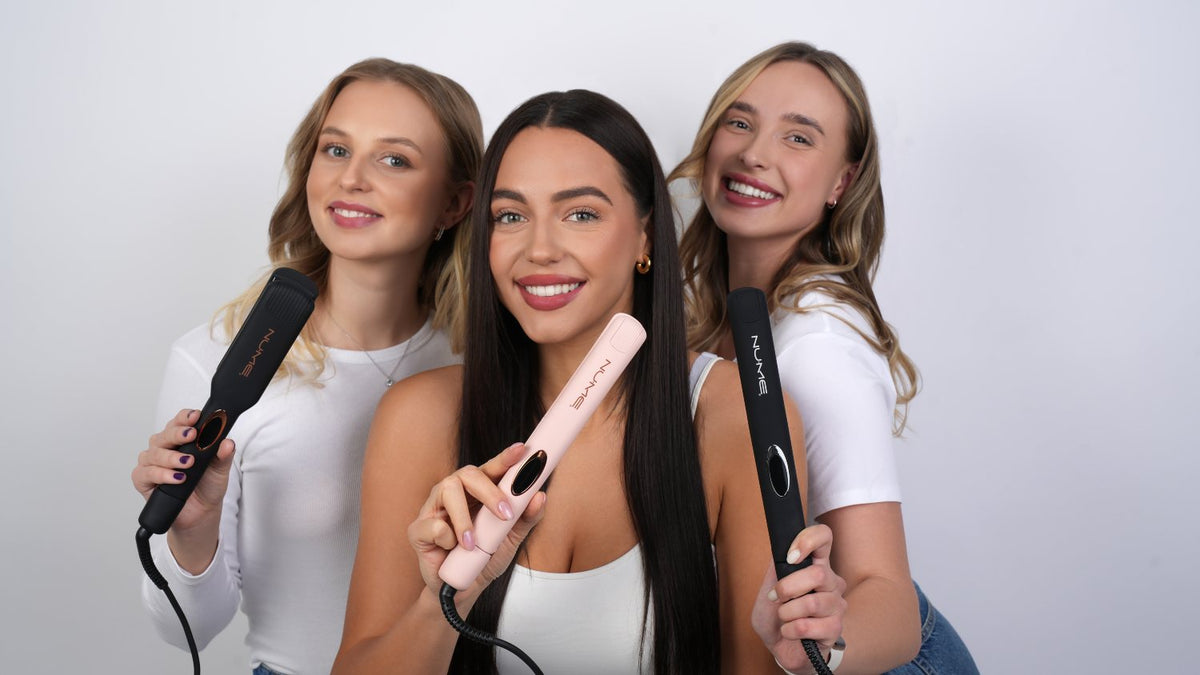
Compare 13 of the best hair straightening treatments, from flat irons and smoothing products to salon services and permanent methods. Find the right option for your hair.
Lucky are the girls born with poker-straight hair. For the rest of us, straightening can make styling feel a whole lot easier. The real challenge? Choosing the right method from all the best hair straightening treatments.
We’ve compared 12 popular options, from flat irons and smoothing products to salon keratin treatments, relaxers, and Japanese straightening. Each works differently: some smooth hair until your next wash, while others chemically change the treated strands and grow out over time.
The best choice depends on your hair type, the result you want, and how long you want it to last. So we’ve laid out the pros, cons, and key differences to help you find your match, without hours of research.
Best Hair Straightening Treatments: 13 Methods Compared
Ready to meet the contenders? We’ve ranked the best hair straightening treatments by the finish they deliver, how long it lasts, and how much upkeep they ask of you. Find your match in the NuMe’s Rank column, and let the good hair days begin.
Compare 13 Hair Straightening Methods
From a quick style to a lasting texture change, compare the results, upkeep, and NuMe’s editorial rankings to find your match.
On smaller screens, each method becomes an easy-to-scan card.
| Method | Results & commitment | Pros | Cons | How long it lasts | A good fit if… | NuMe’s Rank |
|---|---|---|---|---|---|---|
| Flat iron | Sleek, precise, temporary; uses heat. | Precise styling; adjustable finish; no chemical change. | Heat exposure; humidity-sensitive; takes sectioning. | Hours to next wash, often 1–3 days if kept dry. | You want a straight style for a day. | 4.7 / 5.0 |
| Hot comb | Smooth roots; temporary, heat-based. | Smooth roots; quick touch-ups; no salon visit. | Scalp-near heat; technique matters; humidity-sensitive. | Hours to next wash, often 1–3 days if kept dry. | Root control is your main goal. | 3.6 / 5.0 |
| Blowout or silk press | Bouncy or sleek; temporary. | Polished finish; added movement; no permanent change. | Heat required; humidity-sensitive; takes time. | A few days to about 2 weeks; silk presses may last longer with careful upkeep. | You want a salon-style finish. | 4.2 / 5.0 |
| Hot-air or blow-dry brush | Smooth with volume; temporary. | Dries and styles together; adds volume; easy to refresh. | Less sleek finish; takes practice; uses heat. | Hours to next wash, often 1–3 days. | You like a softer, fuller blowout. | 4.1 / 5.0 |
| Heated straightening brush | Quick smoothing; keeps some body. | Quick to use; keeps body; simple touch-ups. | Less precise; may not smooth tight curls; uses heat. | Hours to next wash, often 1–3 days. | You want an easy, brushed-through look. | 4.2 / 5.0 |
| Heatless methods | Gentle stretch; softer results. | No hot tools; low-cost; gentle stretch. | Takes time; results vary; less sleek finish. | Until washing or moisture, from part of a day to a couple of days. | You want to skip hot tools. | 3.5 / 5.0 |
| Smoothing creams, serums, and sprays | Tames frizz; doesn’t straighten alone. | Easy to apply; tames flyaways; helps polish a style. | Won’t straighten alone; can feel heavy; results vary. | Until washing or moisture, from part of a day to a couple of days. | You want a smoother-looking finish. | 3.7 / 5.0 |
| At-home smoothing treatment | Longer-lasting smoothing; multi-step. | Convenient; customizable finish; longer wear than styling. | Multi-step process; heat may be involved; formula-dependent results. | About 1–2 weeks for some systems; check the formula’s instructions. | You prefer an at-home routine. | 4.6 / 5.0 |
| At-home keratin or Brazilian-style kit | Smoother hair; results vary by kit. | At-home option; can smooth frizz; longer-lasting result. | Detailed application; formulas vary; easy to misapply. | About 6–12 weeks, depending on the kit and aftercare. | You’re comfortable following detailed steps. | 3.8 / 5.0 |
| Salon keratin or Brazilian smoothing treatment | Less frizz; smoother styling. | Professional application; smoother feel; easier styling. | Salon cost; aftercare needed; results vary by formula. | About 2–6 months; varies by formula. | You want salon help with manageability. | 3.9 / 5.0 |
| Acid-based smoothing or nanoplasty | Longer-lasting smoothing; formula varies. | Longer-lasting smoothness; frizz control; salon application. | Formula-dependent; ingredient checks needed; results vary. | About 3–6 months in some salon claims; varies by formula. | You’ve checked the ingredients first. | 3.5 / 5.0 |
| Chemical relaxer | Permanently straightens treated hair. | Lasting straightness; less daily styling; defined result. | High commitment; touch-ups needed; can stress hair and scalp. | Permanent on treated hair; new growth appears over time. | You want a lasting texture change. | 3.2 / 5.0 |
| Japanese thermal reconditioning or rebonding | Very straight treated hair; high commitment. | Very sleek result; lasting change; less daily styling. | High commitment; grow-out line; chemical and heat processing. | Permanent on treated hair; touch-ups are often considered around 6–12 months. | You want sleek hair and planned grow-out. | 3.3 / 5.0 |
1. Flat Iron

When comparing the best hair straightening treatments for a sleek style at home, the flat iron is the classic “I want smooth hair by breakfast” choice. Its heated plates straighten dry strands, but the result is temporary: washing, rain, or a humid day can bring your natural texture back.
How to get a smoother result with less fuss:
-
Start with completely dry hair. Flat irons should be used on dry hair unless the tool specifically says otherwise. Apply a heat protectant that’s designed for flat ironing, and let it dry before you start.
-
Section first, then straighten. Clip away the top layers and work through manageable sections. Smaller sections make it easier to keep the iron moving evenly from roots to ends.
-
Start with lower heat. Increase the temperature only if you need to. Fine, fragile, or chemically treated hair may need less heat than thicker, coarser hair; there’s no prize for setting the iron to maximum.
-
Use one steady pass when you can. If a section doesn’t smooth, check that it’s dry and small enough before turning up the heat or going over it again. Repeated passes add more heat exposure.
-
Let your hair cool before brushing or finishing. Give the style a moment to settle, then enjoy your smooth-hair era.
Expert's Take
A good iron should have different temperatures for different hair types, that’s why it’s important to choose a flat iron with temperature control. That’s why we give flat irons 4.7/5: they offer precise, versatile styling, while the temporary results and need to manage heat keep them just shy of a perfect score.
2. Hot Comb
 When comparing the best hair straightening treatments for smoothing roots and creating a precise press, the hot comb is the detail tool of the hot-styling world. It can reach places a flat iron may miss, but this is a finesse tool, not a “turn it up and go” situation. It also has a long history in Black hairstyling, which deserves recognition when discussing the method.
For a smoother press, use finesse, not force:
-
Choose a modern electric comb with adjustable heat and a guard if you’re using one at home. Traditional stovetop combs can be difficult to temperature-control.
-
Start with clean, completely dry, detangled hair. Work in small sections so you don’t have to keep going over the same strands.
-
Keep the comb moving and take care around your scalp, ears, and hairline. Let the heat do the work; pressing harder won’t make the style better.
-
Use a heat protectant that’s suitable for dry-hair styling, and follow the tool’s instructions for its temperature settings.
-
Try it first on a small, less visible section. If the hair feels rough or looks unusually dry afterward, stop and reassess the heat or technique.
A hot comb can be especially handy for roots, parts, and wig styling, where precise smoothing matters. For an all-over, sleek finish, a flat iron may be easier to control.
Expert's Take
“The modern hot comb is about finesse, not force,” says hairstylist Paula Peralta. That precision earns hot combs 3.6/5 in our editorial ranking, but the learning curve and need to work so close to the scalp keep the score in check.
3. Blowout or Silk Press

A blowout and a silk press are styling cousins: both use heat and brushwork to smooth hair, but a silk press typically adds a flat iron for a sleeker finish, especially on coily or curly hair. Among the best hair straightening treatments for a polished look without a chemical texture change, these can bring serious bounce, but humidity may invite your natural texture right back to the party.
For a smoother result that lasts longer than your arm strength:
-
Prep for your hair texture. Some hair does well with a rough dry first; finer wavy or curly hair may frizz if you rough-dry it. A stylist-reviewed blowout guide recommends adjusting this step to the hair type.
-
Apply heat protectant and work in small sections. Smaller sections give you more control and a smoother finish.
-
Keep the dryer nozzle pointed down the hair shaft. Follow the brush with the airflow and maintain gentle, even tension. Don’t blast every section on high heat and high airflow; that can leave you with a frizzy, tangled plot twist.
-
Set the shape while it cools. Use a cool shot, or pin or roll a finished section and let it cool before releasing it. This can help the shape hold.
-
Protect the style overnight. A silk or satin scarf or bonnet can help reduce friction. For a silk press, keep sweat and humidity in mind, and resist repeated flat-iron touch-ups.
Expert's Take
Our rule: use controlled heat, small sections, and steady tension; let each section cool before setting the style. We score blowouts and silk presses 4.2/5 for their polished, versatile finish, while the technique, heat, and humidity sensitivity keep them from the top spot.
4. Hot-Air or Blow-Dry Brush

Among the best hair straightening treatments for a smooth, bouncy finish without adding a separate flat-iron step, a hot-air brush is the get-ready shortcut.
It dries and smooths damp hair at the same time, leaving a softer, more voluminous look than the pin-straight finish of a flat iron. The result is temporary, so shampoo day or humidity may bring back your natural texture.
For a blowout that looks polished, not like you wrestled a hairbrush:
-
Start with towel-dried hair, not soaking-wet strands. Apply heat protectant and detangle before you begin.
-
Section your hair before switching on the tool. Smaller sections are easier to guide and dry evenly.
-
Work from roots to ends. Keep the brush moving, maintain gentle tension, and angle airflow down the hair shaft if your tool allows it.
-
Choose heat based on your hair. Begin with a lower setting, especially if your hair is fine, fragile, or color-treated. Turn up the heat only if needed.
-
Finish with a cool setting if your tool has one. Let the style cool before brushing it out, and don’t chase pin-straight results with repeated passes, that’s flat-iron territory.
Expert's Take
Our take: choose a hot-air brush when you want a smoother blowout with body and fewer styling steps. We score it 4.1/5 for convenience and its soft, voluminous finish; it loses a few points because it offers less control for pin-straight styles and still requires careful heat handling.
5. Heated Straightening Brush
 Looking for a quick, brushed-through smooth style? Among the best hair straightening treatments, this one is a bit like giving your hair a very warm pep talk. The heated bristles smooth dry hair while keeping more natural body and movement than a flat iron. Results are temporary, and very tight curls may need more time, or a different tool, to get the finish they want.
For a smoother brush-through:
-
Start with completely dry, detangled hair. This is a dry-hair tool, so don’t rush from damp to straight.
-
Apply a heat protectant that’s meant for dry-hair styling. Let it dry fully before using the brush.
-
Choose a lower heat setting first. Increase it only if you need to; fine or fragile hair may need less heat than thick, coarse hair.
-
Work through small sections with gentle tension. Glide slowly from roots toward the ends, keeping the brush moving and away from your scalp.
-
Check the result before doing another pass. A straightening brush gives a softer finish than a flat iron, so don’t chase pin-straight hair with extra heat.
Expert's Take
Our take: choose a heated straightening brush when you want a smoother, more natural-looking finish and a simpler routine. Our team at NuMe score it 4.2/5 for convenience and body-friendly results; it loses a few points because it may not deliver the ultra-sleek finish some hair types want.
6. Heatless Methods

Give your flat iron the night off and let your hair do a little of the work while you sleep. Wrapping, large rollers, and banding use gentle tension as hair dries; they earn a place among the best hair straightening treatments when you’re after a softer, smoother shape, not a pin-straight, glassy finish.
Pick your no-heat adventure:
-
Wrapping: Comb damp hair around your head and secure it with clips or a scarf for a smoother, flatter shape.
-
Large rollers: Roll sections away from your face for a straighter look with a bit more body.
-
Banding: Add soft hair ties down the length of each section to stretch curls as they dry.
A few little details make a big difference: start with hair that’s damp, not dripping; keep the tension gentle; and wait until your hair is completely dry before taking everything down. A satin scarf or bonnet can help keep your setup in place overnight. Expect smoother, more stretched hair, with results that vary by texture and technique.
Expert's Take
We rate heatless methods 3.5/5 because they avoid hot tools and can gently stretch hair, but they take patience and the results tend to be quite inconsistent.
7. Smoothing Creams, Serums, and Sprays
Frizz has a talent for making an entrance just when you thought your style was finished. Smoothing products can help tame flyaways and add polish, but they won’t straighten curls by themselves. In our best hair straightening treatments roundup, think of them as the finishing touch: useful alongside a blowout or hot tool, with results that depend on the formula and your hair.
A few easy ways to get more from them:
-
Choose your texture: Lightweight sprays and serums can suit finer hair; creams may work better for thicker or drier strands.
-
Use a small amount: Start at the mid-lengths and ends, then add more only if your hair needs it. Too much can leave it flat or greasy.
-
Check the label: Smoothing and heat protection aren’t always the same thing. If you’re using hot tools, make sure your product is labeled for heat protection.
-
Follow the directions: Some formulas go on before blow-drying; others are meant to finish a style.
Expert's Take
We rate smoothing creams, serums, and sprays 3.7/5 for their convenience and ability to make straight styles look sleeker. They lose points because they support the straightening process rather than doing the straightening themselves.
8. At-Home Smoothing Treatments
 This is the “I want my hair to behave for more than one afternoon” option. Unlike a smoothing serum, an at-home treatment is a multi-step process, and the finish can range from less frizz with your natural texture intact to a sleeker, straighter look. That flexibility earns it a place among the best hair straightening treatments, as long as you’re ready to follow the instructions carefully.
One at-home option worth a spot on your shortlist is NuMe’s Vegan Tourmaline Hair Smoothing Treatment. Its vegan, formaldehyde-free formula is designed to smooth frizz and soften unruly texture, and you can tailor the finish, from more manageable curls and waves to a sleeker, straighter look.
Before you start, set aside time for the full routine, the product instructions call for applying the treatment, processing it, rinsing out some of it, then blow-drying. A few reminders:
-
Read the directions first. The steps and timing can vary between treatments.
-
Do a strand test. See how your hair responds before applying it all over.
-
Keep it off your scalp and use the application method specified on the label.
-
Choose your finish. For NuMe’s treatment, the product instructions describe using fewer flat-iron passes, or skipping that step, to keep more wave or curl.
-
Plan for upkeep. NuMe recommends repeating its treatment about every three weeks; results can vary by hair and routine.
Expert's Take
Our editorial rating is 4.6/5 for the customizable finish and at-home convenience. The score reflects the extra time, heat styling, and careful application involved; it’s our rating of the method, not an independent product test.
9. At-Home Keratin and Brazilian-Style Kits
Here’s where a bathroom mirror and a box of gloves start feeling like a bigger commitment. At-home keratin and Brazilian-style kits are designed to smooth frizz and make hair easier to style, but formulas and results vary. They’re on the list of the best hair straightening treatments to consider if you want a smoother look that lasts beyond wash day, though “keratin” on the box doesn’t guarantee every kit works the same way.
Before you DIY, keep these pointers handy:
-
Read the whole instruction sheet first. Check the application steps, processing time, and aftercare before you open the bottle.
-
Do a strand test. It can help you see how your hair responds and whether the finish is what you had in mind.
-
Check the ingredients and heat directions. These kits can involve a blow-dryer or flat iron, so use only the temperature and technique the specific instructions call for.
-
Work carefully and ventilate the room. Don’t apply the formula directly to your scalp unless the instructions say to, and avoid improvising with timing or extra heat.
-
Be realistic about the result. Smoother and less frizzy may be the goal; pin-straight hair isn’t guaranteed.
Expert's Take
We rate at-home keratin and Brazilian-style kits 3.8/5 for their potential to simplify styling and smooth frizz between salon visits. They lose points for the involved application, formula differences, and results that depend heavily on following the kit’s directions.
10. Salon Keratin and Brazilian-Style Smoothing Treatments
 This is the salon chair version of smoothing: a stylist applies a treatment, then usually blow-dries and flat-irons the hair to finish it. Depending on the formula and technique, the result may be less frizz and easier styling while keeping some movement, or a sleeker look. That range makes salon smoothing one of the best hair straightening treatments for people who want a longer-lasting change without choosing a permanent relaxer.
Before booking, have a quick consultation:
-
Describe your dream finish. “Less frizz, please” and “make it pin-straight” are very different requests.
-
Share your hair history. Mention color, bleach, relaxers, or other chemical services so the stylist can advise whether the treatment is suitable.
-
Ask what’s in the formula. Some smoothing products can release formaldehyde when heated; ask to see the ingredient list and whether the salon has proper ventilation.
-
Ask about upkeep. Results and maintenance vary by treatment, hair, and washing routine, so find out what to expect before you commit.
Expert's Take
We rate salon keratin and Brazilian-style treatments 3.9/5 for the potential to reduce frizz and simplify styling over time. They lose points for the cost, the commitment to aftercare, and the fact that formulas and results vary from salon to salon.
11. Acid-Based Smoothing and Nanoplasty
“Organic” and “formaldehyde-free” can sound like a green light, but with acid-based smoothing, the ingredient list matters more than the buzzwords. Nanoplasty formulas vary, and some use glyoxylic acid with heat to smooth hair. If you’re comparing the best hair straightening treatments, this is one category to research carefully before booking.
-
Ask for the full ingredient list. Don’t rely on the treatment name or a “formaldehyde-free” claim alone.
-
Discuss your hair history and desired finish with the stylist, and ask what heat and aftercare the service involves.
-
Pause if you can’t get clear answers about the formula or its use.
Expert's Take
We rate acid-based smoothing and nanoplasty 3.5/5. A smoother finish may appeal, but formulas differ, and the concerns around glyoxylic acid make ingredient transparency essential.
12. Chemical Relaxers
 This one’s a bigger commitment than a blowout: relaxers chemically change the treated hair so it stays straighter as it grows out. If you are seeking a lasting change in texture when comparing the best hair straightening treatments, keep in mind that there is a trade-off with chemical relaxers, aka more involved growth-out and careful upkeep.
A few things to keep in mind:
-
Expect new growth. Your roots will grow in with their natural texture, so touch-ups may become part of your routine.
-
Protect your scalp. Don’t relax hair if your scalp is irritated, sunburned, or damaged, and avoid applying the product directly to your skin. The FDA advises following the package instructions closely.
-
Don’t overlap treatments. Applying relaxer over previously treated lengths can add stress to hair that’s already been chemically processed.
-
Be gentle between appointments. Chemical straightening can weaken the hair shaft and increase the chance of breakage, so handle it gently and get professional advice if you’re unsure how it will work with color or other treatments.
NuMe’s Expert Take:
We rate chemical relaxers 3.2/5. They can create a lasting straight look, but the commitment, careful upkeep, and potential for scalp or hair damage bring the score down.
13. Japanese Thermal Reconditioning (Rebonding)
For anyone ready to make a major change, Japanese straightening is the full plot twist: it uses a chemical process and heat to permanently straighten the treated hair. New growth still comes in with your natural texture, so the smooth lengths and curly roots eventually need a plan.
That puts it among the best hair straightening treatments for a very sleek, long-lasting result, but it’s definitely not a casual “let’s see what happens” appointment.
Before booking:
-
Bring your hair history. Color, bleach, relaxers, and previous smoothing services can affect what a stylist recommends.
-
Talk through the grow-out. Ask how touch-ups work and how the new growth will blend with the treated lengths.
-
Be clear about your goal. Show a photo and discuss whether you want pin-straight hair or to keep some movement.
-
Plan for gentle aftercare. The process combines chemical treatment and heat, so ask your stylist what care your hair will need afterward. Research on permanent straightening processes describes chemical reduction, heat treatment, and oxidation as part of the method.
NuMe’s Expert Take:
We rate Japanese thermal reconditioning 3.3/5 for its dramatic, lasting straightening effect. The permanent change, visible grow-out, and need to consider your hair’s processing history make it a high-commitment pick.
So, Which One Of The Best Hair Straightening Treatment Is Right for You?
After all those options, the winner depends on what you want your hair to do, and how much time you want to spend getting there. The best hair straightening treatments for a quick change are different from the best ones for a longer-lasting shift.
-
Want a straight look for a day? A flat iron, blowout, or heated brush gives you control without a permanent change.
-
Prefer smoother hair with some natural texture? Look at smoothing products or treatments that let you choose a softer finish.
-
Ready for a longer-term change? Salon treatments, relaxers, and Japanese thermal reconditioning need more commitment and careful consultation.
-
Have color-treated, fragile, or previously processed hair? Share that history with your stylist before choosing a chemical service.
FAQs About Hair Straightening Treatments
What are the best hair straightening treatments?
There isn’t one best hair straightening treatment for everyone. For a straight style that lasts until your next wash, try a flat iron or blowout; for frizz reduction, consider a smoothing treatment; for a lasting change to treated strands, look into chemical relaxers or Japanese thermal reconditioning.
Which hair straightening treatment lasts the longest?
Japanese thermal reconditioning and chemical relaxers permanently change the treated hair’s texture. New growth will still have your natural texture, so you may eventually want touch-ups or a new style to blend the roots.
What’s the least damaging way to straighten hair?
No method is completely damage-free, but heatless styling avoids hot tools. If you use a flat iron or blow-dryer, start with fully dry hair, apply a heat protectant, and use the lowest setting that works for your hair.
What’s the difference between a keratin treatment and Japanese straightening?
Keratin and Brazilian-style treatments are generally used to smooth frizz and make hair easier to style; results vary by formula. Japanese straightening uses chemicals and heat to permanently straighten the treated strands, so the grow-out is different.
Can I straighten my hair at home?
Yes. Flat irons, heated brushes, and heatless methods are common at-home options. Some smoothing treatments and relaxers are also sold for home use, but follow the specific instructions closely and check the ingredients before applying a chemical treatment.
Can hair be permanently straightened?
A chemical relaxer or Japanese thermal reconditioning can permanently straighten the hair that has been treated. They won’t change new growth, so your natural texture will return at the roots as your hair grows.
Does a keratin treatment make hair completely straight?
Not necessarily. Many keratin or Brazilian-style services focus on reducing frizz and making hair more manageable; the final result depends on the formula, your hair, and the process used.
Is nanoplasty safe for hair?
It depends on the formula. Some hair-straightening products contain glyoxylic acid, which France’s ANSES advises consumers to avoid while its risks are assessed. Check the ingredient list and ask the salon what product it uses.
Share:
10 Quick Tips to Straighten Your Hair Without Damage
2 comments
I would like to get it, but here in Mexico I don’t know where
My hair is frizzy on sides and sometimes has a wave on sides