
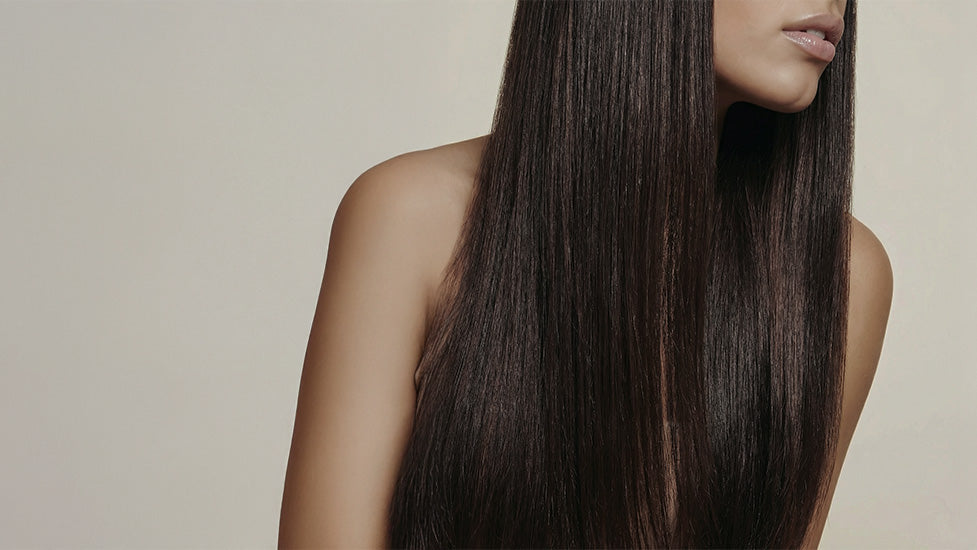
How can you straighten your hair without damage? Continue reading to get some of our most essential tips.
I used to think that if my hair wasn’t getting straight enough, I just needed to turn up the heat. And if one section refused to cooperate, I’d go over it again until it did. My hair looked smooth when I was done, so I didn’t give it much thought…until I started noticing how dry the ends felt between washes.
That’s what made me pay more attention to how to straighten my hair without damage, instead of just how quickly I could get it done. I started looking at the things I’d been rushing through, like drying it completely, applying heat protectant, and taking smaller sections.
Unfortunately, there are many things we do (or don’t do) that could be causing serious damage to our hair in the long run. In this article, we will tell you some of our secrets to straighten your hair without damage - so, without further ado, let’s jump right into it!
Why does hair straightening cause damage?
Before we tell you how to straighten your hair without damage, it is important to understand the exact reason why hair may get damaged in the first place.
The main reason why hair straightening can cause damage is heat, especially when it’s done with hot tools that don’t allow for temperature control. Temperatures over 300°F change the shape of your hair’s keratin strands, converting them from ⍺-keratin to β-keratin, causing the hair to lose its elasticity and become more vulnerable.
Once the keratin strands of your hair are changed, they can’t be reversed back to ⍺-keratin, as they will maintain their new shape on a molecular level.
What does this mean? Simply put, too much heat can weaken your hair, making it less flexible and more likely to break. You may notice that it feels rougher, looks frizzier, or develops split ends more easily.
This is why choosing the right temperature and avoiding repeated passes over the same section are so important for straightening your hair without damage, even if your hair looks smooth right after straightening.
For example, I’ve noticed that my hair can look smooth right after straightening, but feel dry and rough when I wash it again. That’s usually when I know I need to turn down the heat, so make sure to pay close attention to cues like these.
What contributes to hair damage?
If you think heat and lack of temperature are the only culprits, you might be missing out on some other possible factors. Unfortunately, you could also be adding to damage if:
-
You dye or bleach your hair too often, as this can make it more fragile
-
Expose your hair frequently to the sun without putting a protector first
-
You pull at knots when brushing your hair, which can cause strands to break.
-
You wear tight ponytails or buns every day, putting extra tension on your hair.
-
You rub your hair too hard with a towel instead of gently squeezing out the water.
If your hair is already damaged, a gentle hair care routine becomes even more important to prevent further damage when straightening your hair. So, let me share some of my tips straight from years of experience.
How to Straighten Your Hair Without Damage: 10 Tips
1. Check what’s on your hair before you start straightening
 Before I do any hair straightening at all, I always make sure to prepare my hair properly. Think about what’s probably already on your hair.
Have you just washed it, or are you reaching for your straightener after a few days of dry shampoo, hairspray, and styling products? This is key in order to straighten your hair without damage.
It’s easy to forget about yesterday’s products when you’re just trying to fix a few pieces before leaving the house. Before adding more product or turning up the heat, check whether your hair needs a wash rather than another touch-up.
On wash day, use a shampoo that suits your scalp and follow with conditioner, paying attention to your lengths and ends. Take the time to rinse thoroughly, especially underneath and at the back, where it’s easy to miss a spot when you’re in a hurry.
But do you need to wash your hair every time you want to straighten it? Not necessarily. If it’s still clean and manageable, another wash may not be needed. If it feels coated, sticky, or stiff from styling products, avoid repeatedly running your flat iron over it in the hope that more heat will fix the finish.
The same goes for your straightener: once it’s unplugged and completely cool, check the plates for product residue and clean them according to the manufacturer’s instructions. Your hair is only one part of the preparation.
2. Apply leave-in treatments right after washing

If it’s hair wash day (yay!), your next best step in order to straighten your hair without damage and ensure maximum smoothness will be to apply your leave-in treatments right away.
The leave-in treatments you choose will depend on your hair type and texture, but one thing you shouldn’t skip before heat styling is your heat protectant. It’s easy to forget when you’re in a hurry (we’ve all been there!), but with flat irons reaching 400°F or more, this is a step worth making time for.
A heat protectant helps reduce heat damage, and depending on the formula, it can also help with moisture retention and frizz. Just keep in mind that it doesn’t make your hair heatproof, so you’ll still want to keep the temperature under control.
If your leave-in treatment is designed for damp hair, apply it after washing and gently towel-drying, following the instructions on the bottle. Some products are made for dry hair instead, so you haven’t missed your chance if your hair has already air-dried.
To sum it up, here are two products worth considering before your next styling session:
-
Leave-in hair mask - especially if your hair is damaged or bleached, a good leave-in mask will improve the look and feel of stressed strands without weighing hair down.
-
Thermal Heat Protectant – an essential part of your routine if you want to straighten your hair without damage, although it helps reduce the risk rather than eliminate it.
When you’re running late, skipping a product can feel like an easy way to save time (especially when your straightener is already plugged in!). You don’t need to use every product on your shelf, but make time for heat protection and let your hair dry fully before styling.
And yes, you can let your hair air-dry before straightening it, or use an ionic fast drying hair dryer for a gentle drying. Your natural waves or curls may need a little more sectioning and preparation, but that doesn’t mean you automatically need more heat.
Whichever drying method you choose, make sure your hair is completely dry before reaching for your flat iron. If you’re wondering how to straighten your hair without damage, this is one step you really don’t want to rush!
3. Don’t use too many styling products

It can be tempting to add a little more serum or hairspray when your style isn’t sitting quite right (we’ve all been there). But before you reach for another product, take a second to think about what’s already on your hair if you are looking to straighten your hair without damage.
Ask yourself:
-
Have I used dry shampoo, hairspray, serum, or another styling product since my last wash?
-
Does my hair feel sticky, stiff, or coated?
-
Does it look weighed down, even after I’ve brushed or restyled it?
-
Am I adding another product because my hair needs it, or because I’m trying to fix a style that isn’t holding?
If your hair feels soft and clean, a light touch-up may be all it needs. If it feels coated or heavy, adding another layer may leave it feeling even less manageable. It may be time to wash it, especially if your scalp also feels oily or your hair looks dull.
There isn’t a set number of products that’s “too many”; it depends on your hair and what you’ve used. Just try not to keep layering products to fix a result you’re not happy with. Sometimes your hair needs a wash, not one more spritz.
4. Make sure your hair is completely dry
 This might seem like an obvious one, but a section can feel dry on top while still holding moisture underneath. The back of your head and the hair close to your roots are especially easy to miss when you’re trying to get ready in a hurry.
Keep in mind that your hair strands can absorb anywhere from 30% to 50% of their weight in water. When you use a flat iron or another hair straightener on damp hair, that moisture heats up and evaporates quickly.
It matters more than you might think: in a lab study, researchers found considerably more structural damage in hair heat-styled with water present than in dry hair. They also tested changes in the hair’s physical properties, which backed up what they saw under a microscope. In simple terms, damp hair can take a harder hit from the heat than dry hair.
So before you reach for your flat iron, split your hair into sections and check underneath, especially around your nape and behind your ears. If you’re unsure, give those areas a little more time with your dryer on a low or medium setting.
And if you hear sizzling or see steam while straightening, stop. That’s a sign there’s still moisture there, not something to push through, and it’s key for straightening hair without damage.
A regular flat iron should only be used on dry hair. The American Academy of Dermatology recommends using flat irons on dry hair at a low or medium setting. That’s why a flat iron with temperature control is an absolute must, in my humble opinion.
If your tool is specifically designed for wet-to-dry styling, follow its instructions; otherwise, make sure every section is fully dry before you start.
5. Test a single section before straightening all your hair

I recommend trying a section underneath before you get started on the rest of your hair. Just make sure it’s about the same width and thickness as the sections you plan to straighten. A tiny strand might look smooth right away, but it won’t tell you much about how your regular sections will turn out.
Start on a lower setting and glide the iron through once, slowly. Let the section cool, then check the result. If it still looks puffy, don’t rush to pass over it again.
First, check that the section isn’t too thick and that the strands are smooth and detangled. If they are, try another similar section with the iron one small setting higher.
What you notice |
What I’d try next |
|
The section looks smooth once it cools |
Stick with that setting for the rest of your hair. |
|
It still looks puffy, but the section was thick |
Try a thinner section before adjusting the heat. |
|
It’s fully dry and thin, but still isn’t smooth |
Test another similar section one small setting higher. |
This little test can save you from starting on high and hoping for the best. The goal is to find the lowest setting that gives you the result you want, which will really help to straighten your hair without damage.
6. Go easy on your ends

I’ve noticed it’s easy to keep going over the ends because they’re the part you can see most clearly. But your ends have had more time to collect wear from brushing, coloring, sun exposure, and heat, so they can be more weathered than the hair closer to your roots.
If your ends are just a little dry, I recommend gliding over them once and stopping when they look smooth. If they feel rough or you can see splits, more heat won’t fix them. You can also use the NuMe Gloss Boss - our 100% vegan, non-greasy hair oil to soften your dry ends and improve smoothness.
A flat iron might make split ends look neater for a little while, but it can’t permanently mend them. In that case, don’t keep turning up the heat to try to “seal” them; a trim is the lasting fix.
7. Use a flat iron with temperature control
If you are still using a flat iron that only has one or two buttons - for turning it off and on, it might be time to throw it in the trash. And yes, I am being absolutely serious.
Investing in a flat iron with temperature control is an absolute must if you are looking to straighten your hair without damage, because you may be applying more heat than it’s actually needed for your hair.
I recommend starting within these ranges and testing a small section before styling your whole head:
What temperature should you use to straighten your hair?
I recommend starting within these ranges and testing a small section before styling your whole head:
Hair type or condition |
Starting temperature |
|
Fine, fragile, bleached, or damaged hair |
250–300°F |
|
Medium or average-textured hair |
300–350°F |
|
Thick or coarse hair |
350–375°F |
Start at the lower end and increase the temperature gradually only if you need to.
Very curly or coily hair may need more heat, but I wouldn’t treat 400–450°F as a routine recommendation: research links flat-iron temperatures above 392°F (200°C) with significant damage to hair keratin.
When you’re choosing a flat iron, if you want to straighten hair without damage, I recommend looking for one with adjustable heat settings and plates that glide smoothly through your hair.
The NuMe Megastar Flat Iron has 1-inch pure tourmaline ceramic floating plates and an integrated far infrared heat strip. It also won the Glamour award for Best Hair Straightener.
Of course, even a good flat iron can’t prevent heat damage entirely on its own. I’d still start with a lower setting and use the heat protectant that works for your hair.
8. Avoid ironing the same area twice

Another important tip you need to know if you are looking to straighten your hair without damage is to avoid ironing the same area twice or worse - multiple times. Quite often, we use our hair straightener more than once on a single section of hair.
Unfortunately, doing this can cause a lot of damage to the hair. Instead of going over the same area multiple times, it’s better to do one quick motion with your flat iron and then move on to the next area.
9. Straighten the hair in small sections

I know how tempting it is to give one section another pass when it still has a little wave or crease. But if you’re trying to straighten your hair without damage, I recommend pausing to figure out why it didn’t smooth out the first time.
Repeated heat exposure can add to damage, so aim for one slow, steady glide with your flat iron. The American Academy of Dermatology also recommends limiting heat and keeping a flat iron on low or medium heat.
Before you go back over a section, ask yourself:
-
Is the section too thick? If the plates can’t grip it evenly, split it into two smaller sections.
-
Did I move the flat iron smoothly? Try to keep the iron moving at a steady pace instead of stopping over one spot.
-
Is it just one little bend or missed piece? Fix that small area instead of reheating the whole section.
I recommend letting the hair cool for a moment before deciding whether it needs anything else. Sometimes a section looks different while it’s still warm, and going straight back in with the flat iron can mean more heat than it needed.
10. Give your hair a little break after straightening

I know it can be tempting to tie your hair up as soon as you’ve finished styling, especially if you’re heading out the door. But give it a few minutes to cool first. Tying it up while it’s still warm can leave a crease in your style, and pulling it into a tight ponytail can put extra tension on your hair.
The next morning, try brushing or smoothing your hair with your hands before reaching for your flat iron again. If only a couple of pieces have lost their shape, touch up those areas instead of straightening your whole head.
When you’re trying to straighten your hair without damage, giving your hair a break between heat-styling sessions matters too.
You don’t need to keep layering moisturizer onto your hair after every styling session. I recommend using conditioner when you wash it and adding a leave-in only if your hair actually needs it. And if you notice split ends, a trim is the only lasting fix; products can make them look smoother temporarily, but they can’t permanently mend a split.
FAQ: Straighten Your Hair Without Damage
What temperature should I use to straighten my hair?
Use the lowest temperature that gives you the result you want. As a starting point, try 250–300°F (121–149°C) for fine, fragile, bleached, or damaged hair; 300–350°F (149–177°C) for medium-textured hair; and 350–375°F (177–191°C) for thick or coarse hair.
Start low and test a small section before straightening the rest. These ranges reflect stylist guidance, not guaranteed safe limits.
Can I straighten my hair without damage?
You can reduce the risk, but no flat iron can guarantee zero damage. Use it on completely dry hair, start with the lowest setting that works, and limit how often you use it.
Dermatologists recommend using flat irons on low or medium heat and no more often than every other day.
Can I use a flat iron on damp hair if I use heat protectant?
No. Make sure your hair is 100% dry before using a regular flat iron. A lab study found considerably more structural damage when hair was heat-styled with water present; heat protectant doesn’t make damp hair safe to iron.
How many times should I pass a flat iron over each section?
Aim for one slow, smooth pass. If a section still needs attention, check that it’s fully dry and thin enough for the plates to grip evenly. One hairstylist recommends keeping it to two passes maximum, but there isn’t a scientifically established number that guarantees no damage.
How often can I straighten my hair?
The American Academy of Dermatology recommends using a flat iron no more often than every other day. For fragile, bleached, or damaged hair, use it less often if you can; less heat means less repeated exposure.
Does heat protectant prevent all heat damage?
No. Some heat-protective ingredients can reduce damage, but a protectant doesn’t make high heat or repeated passes harmless. Keep the temperature low enough for your hair and follow the product’s directions.
Share:
Why Your Hair Never Stays Straight and What Actually Works
5 comments
i need help with my hair its short and i kind of have curtain bangs its HARD to not have any split ends and i want to straighten my hair everyday cs i hate it and i want some product tips to use because i want it straight but i hate i99t cs it has allot of split ends and its ugly and idk how to cut them off i just need tips!!
Is it okay to straighten hair twice a week?
Is there a way i could have straight hair everyday without actually straightening it everyday, if my natural hair is kind of wavy?
This article is a game-changer! As any individual who loves having straight hair however concerns about the damage, these suggestions are a breath of clean air. I’m honestly attempting out the anxiety blow-drying technique.
very insightful