
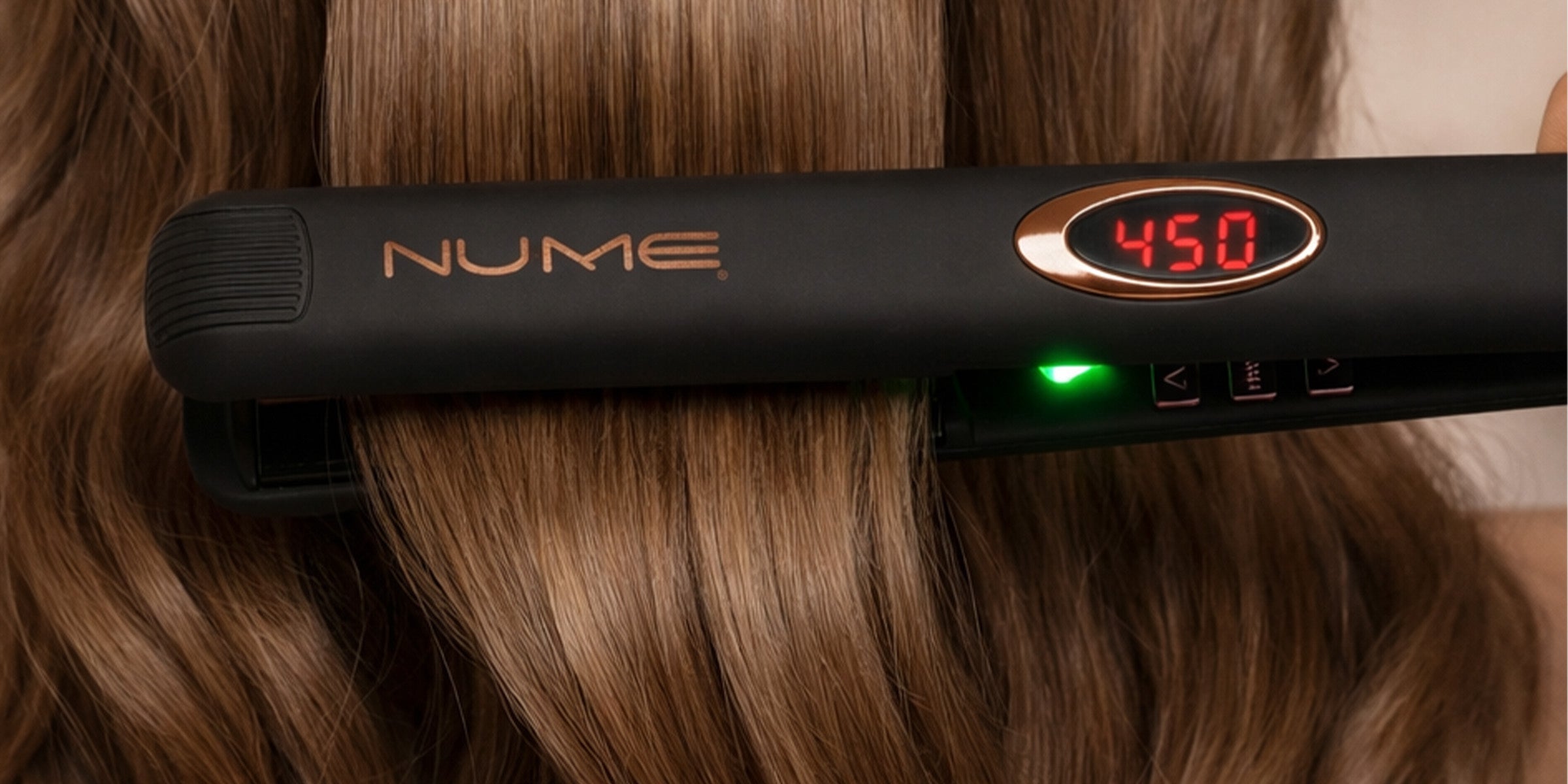
If you’ve ever wondered what temperature you should straighten your hair at, you’re not alone. It’s one of the most searched hair styling questions, and also one of the most misunderstood. The truth is: there isn’t one “perfect” temperature that works for everyone. What is safe and effective depends on your hair type, hair history, and how you use heat, not just the number on your flat iron.
In this guide, we’ll break down how hair responds to heat, what temperature ranges actually make sense, and how to find the best temperature for straightening hair without damage.
Why Hair Straightening Temperature Matters
Hair straighteners work by temporarily changing the structure of your hair using heat. When the temperature is too low, the hair won’t straighten effectively. When it’s too high, the hair can lose moisture, weaken, and become more prone to breakage. That’s why choosing the right temperature is one of the most important steps in heat styling, especially if you straighten your hair regularly.
Using the correct heat level helps:
-
Reduce unnecessary damage
-
Maintain moisture and shine
-
Improve styling results with fewer passes
Why There’s No One “Correct” Temperature
Many people search for the best temperature for hair straightener use, hoping for a single number. In reality, heat tolerance varies based on several factors:
-
Hair thickness and density
-
Whether hair is natural, colored, or chemically treated
-
Current moisture level
-
How often is heat used
This means two people can use the same flat iron, and get completely different results.
The Key Factors That Determine Your Ideal Straightening Temperature
Before choosing a heat setting, consider the following:
Hair Texture and Thickness
Fine or thin hair typically requires lower heat, while thicker or coarse hair may need a higher setting.
Hair Condition
Hair that is color-treated, bleached, or damaged is more sensitive to heat and benefits from lower temperatures.
Moisture Level
Dry hair heats faster and can become brittle at high temperatures. Well-conditioned hair tolerates heat more evenly.
Styling Technique
Using slower passes and smaller sections allows you to straighten hair at lower temperatures while still getting smooth results.
Recommended Hair Straightening Temperature Ranges

-
Fine or damaged hair: 250°F–300°F (120°C–150°C)
-
Normal or medium hair: 300°F–375°F (150°C–190°C)
-
Thick, coarse, or textured hair: 375°F–410°F (190°C–210°C)
Temperatures above 410°F should be used cautiously and only when necessary.
Is 450°F Too Hot for Hair?
While some flat irons reach 450°F, that level of heat isn’t suitable for most hair types regularly. Extremely high temperatures increase the risk of moisture loss and breakage.
In many cases, a better technique, not more heat, leads to smoother results.
How to Test the Right Temperature for Your Hair

-
Start at the lower end of your range
-
Straighten a small test section
-
If hair smooths with one slow pass, the temperature works
-
If not, increase slightly
Common Mistakes That Lead to Heat Damage
-
Starting at the highest heat
-
Multiple passes over the same section
-
Straightening damp hair
-
Skipping heat protection
How Heat Protection Affects Temperature Choice
Using a heat protectant reduces moisture loss and often allows styling at lower temperatures while achieving better results.
Explore Heat Styling Essentials >
Does Hair Straightening Temperature Change Over Time?
Yes. Hair condition changes due to:
-
Weather
-
Color treatments
-
Product routines
Re-check your temperature regularly.
Finding the Right Balance
Straightening safely is about using the right heat, not the highest heat.

Learn More About Heat Styling Tools >
Frequently Asked Questions About Hair Straightening Temperature
What is the best temperature for straightening hair without damage?
Most people get the best results between 300°F–375°F with proper technique.
What temperature should I straighten my hair in Celsius?
Fine hair: 120–150°C
Medium hair: 160–190°C
Thick hair: up to 210°C
Is higher heat better for faster straightening? No. Slower passes at moderate heat are safer and more effective.
Share:
What is Thermal Hair Styling? 4 Things You Need to Know
How to Do a Silk Press at Home in 7 Steps Like a Pro